Products
Clad Plate Clad Pipe & Fittings Stainless Steel Products
Company
Materials & Grades Applications Quality & Standards About Us Contact Request a Quote
Home/Products/Clad Plate
Product 01 — Plate

Stainless Steel Clad Plate

Two metals, one plate. A corrosion-resistant stainless or nickel-alloy surface is fused onto a carbon or low-alloy steel base, so you buy alloy only in the millimetres that actually meet the medium — and ordinary steel everywhere else.
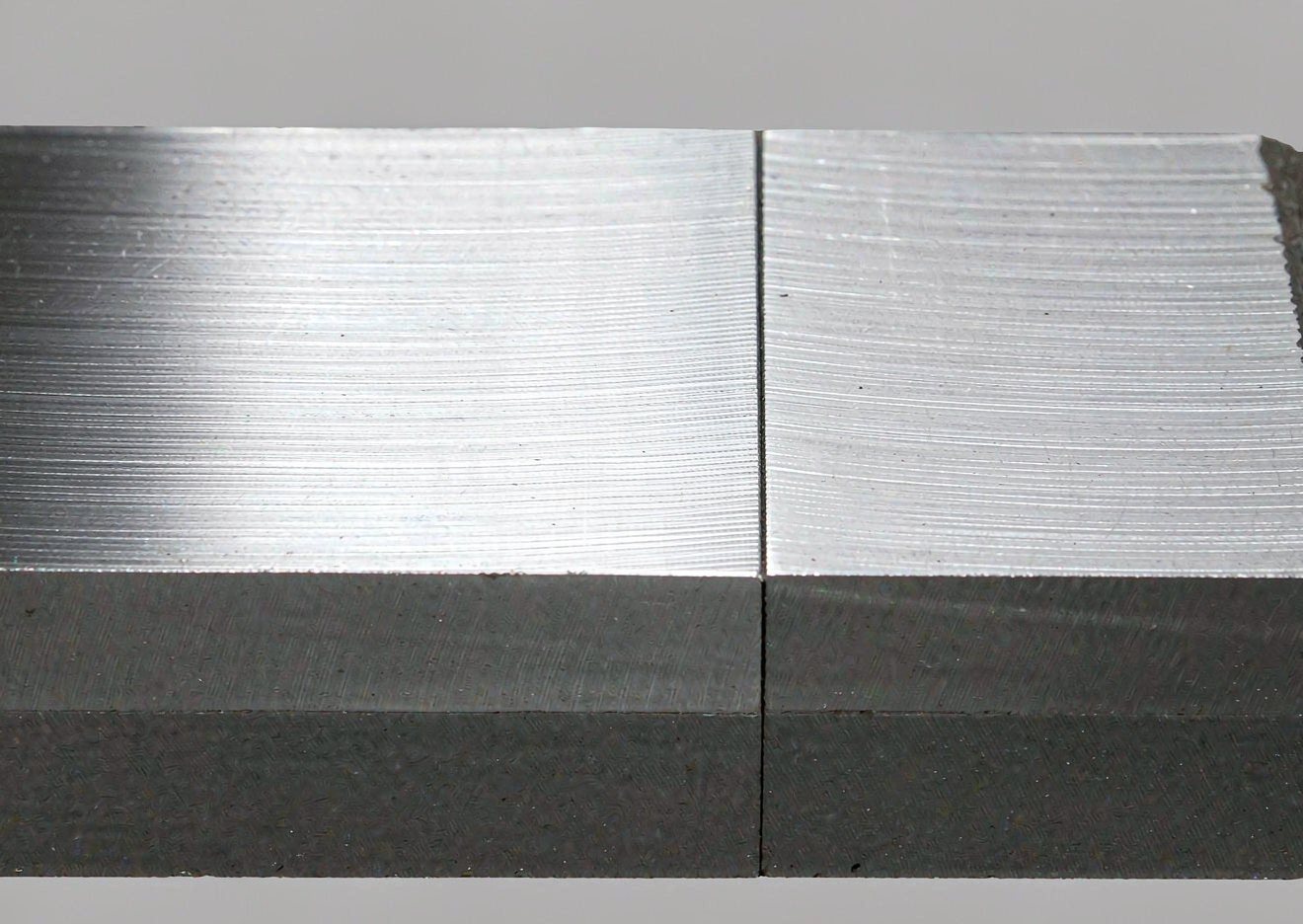
Macro close-up of a clad plate cut edge showing the stainless layer bonded to the carbon steel base Bond interface · macro section
The basic idea

Think of it as a sandwich,
not a coating.

A clad plate is a single piece of steel made of two different metals joined across their whole contact surface. The top layer is 1 to 6 mm of stainless steel or nickel alloy. The rest — the structural part — is carbon or low-alloy steel.

Because the two metals are fused together under extreme pressure or heat, the boundary between them is a real metal bond, not glue and not a mechanical fit. The plate bends as one piece. It welds as one piece. It does not come apart.

NOT THIS
A coating
Paint, plating or spray deposits sit on top of the steel and can chip, flake or be scratched through.
NOT THIS
A loose liner
A liner is a separate thin sheet pushed inside a vessel. It can buckle, collapse or creep under pressure and thermal cycling.
NOT THIS
Weld overlay
Overlay is applied bead by bead on site or in a shop. It is slow, dilution-affected and only as good as the welder.
CLADDING 1–6 mm BOND BASE 6–60 mm 304 / 316L / 2205 / 825 / 625 Q235B / Q345B / A516 Gr.70 / X42–X80

Section through a single-sided clad plate

Configuration

Clad on one side, or on both?

Most vessels and tanks only ever see the medium from one direction. But a surprising number of jobs — two-sided exposure, exposed decorative faces, or a plate that has to stay flat through heavy welding — are better served by cladding both faces.

CORROSION-RESISTANT FACE CARBON STEEL CORE opposite face: mill finish contact medium → this side only
Single-sided

The economical default

One alloy face, one plain steel back. This is what most pressure vessels, tanks, columns and ducting actually need, and it uses the least alloy for the job.

  • Tanks, vessels and columns with a single wet side
  • Ducting, stack liners and chutes
  • Floor plates and structural panels
  • Lowest cost per square metre
ALLOY FACE ALLOY FACE CARBON STEEL CORE identical cladding both sides — 1 + 1 mm, 2 + 2 mm, 3 + 3 mm
Double-sided

When both faces see service

Alloy on both faces. It costs more alloy, but it solves three problems that a single-sided plate cannot: two-sided exposure, two-sided appearance, and distortion during fabrication.

  • Vessels and tanks with product on both sides of a partition
  • Storage tanks where the outer face is also visible or weather-exposed
  • Hygienic equipment requiring cleanable surfaces inside and out
  • Decorative panels — both faces finished in hairline, mirror or embossed
  • Balanced, symmetrical construction: equal cladding thickness both sides
Why symmetry matters

With identical cladding on both faces, thermal expansion and contraction act evenly through the section. Large decorative panels stay flat instead of bowing, and heavily welded assemblies distort far less.

Manufacturing routes

Two ways to bond the two metals

Both produce a genuine metallurgical bond. Which one you should order depends on the thickness combination you need and the size of the plate.

BASE PLATE CLADDING PLATE (tilted) DETONATION WAVE FRONT
Explosion bonding
A controlled explosive charge drives the cladding plate down onto the base plate at an angle. The impact strips the two surfaces clean and welds them together in a wave-patterned metallurgical bond — without melting either metal in bulk.
· Widest thickness range — cladding up to 6 mm and beyond
· Ideal for nickel alloys and thick alloy layers
· No dilution; the alloy keeps its full corrosion resistance
· Choose this when the job is unusual or the alloy is expensive
ASSEMBLY HOT ROLLING MILL BONDED COIL / PLATE
Hot-roll bonding
The two plates are assembled as a sealed pack, brought to rolling temperature and passed through a rolling mill. The reduction in thickness breaks up the interface oxides and pressure-welds the metals into one.
· Produces large plates and continuous coil
· Excellent thickness uniformity and flatness
· Best value for high-volume, standard combinations
· Choose this for big orders of a repeat specification
Technical data

Properties and specification

Key properties
Bond shear strength≥210 MPa
Bonding rate≥99.5% of area
Side bend180°, no separation
Ultrasonic test100% of surface
Cladding thickness1 – 6 mm
Total thickness6 – 150 mm
Max plate size3,000 × 12,000 mm
Working temperatureup to 600 °C*

* Depending on the cladding grade and base steel combination. Alloy 800H and nickel alloys extend the upper limit well beyond this.

Material combinations
LayerTypical gradesThickness
Cladding 304, 304L, 316, 316L, 316Ti, 321, 310S, 904L, 2205, 2507, alloy 825 / 625 / C-276, copper, nickel 1 – 6 mm
Base steel Q235B, Q345B / Q345R, 20R / 20G, A36, A516 Gr.60/70, API 5L X42 – X80, low-alloy Cr-Mo 6 – 150 mm
Configuration Single-sided, double-sided, multi-layer (alloy / steel / alloy / steel) to order
The case for clad

Six reasons projects
switch to clad plate

Clad plate is not a compromise. In most corrosion-resistant duties it is simply the better engineering answer — cheaper, stronger and easier to fabricate.

01
Materials cost down 30–50%
Nickel and molybdenum are the expensive part of stainless and nickel alloys. Clad plate puts them only in the 1–6 mm that touches the process.
02
Full structural strength of carbon steel
Design pressure, toughness and impact resistance follow the base steel grade, not the thin alloy face. Wall thickness and support spacing stay where your engineer put them.
03
Three to five times the service life of bare steel
The alloy face keeps the medium away from the carbon steel. In aggressive wet service that is the difference between a replacement every few years and a replacement every generation.
04
Fabricated like ordinary plate
Shearing, plasma and waterjet cutting, cold and hot bending, rolling, drilling and machining all follow normal practice. Your shop does not need new equipment.
05
A bond that cannot creep
Metallurgical fusion means the interface survives thermal cycling, pressure reversal, bending and forming. There is no gap for the liner to shift into.
06
Lower carbon footprint per square metre
Alloy production is energy-intensive. Using a twelfth of the alloy for the same corrosion protection cuts the embodied energy of the plate dramatically.
Surface finish

More than a plate — it is a surface too

Because the face is real stainless steel, clad plate can be finished exactly like any stainless sheet — which makes it work as hard architecturally as it does industrially.

Hairline / No.4
Short, uniform brushed grain. The workhorse finish for elevators, appliance panels and architectural cladding. Hides fingerprints and light scuffing.
Mirror / 8K
Polished to a near-mirror reflection. Specified for elevator doors, feature walls, signage and high-end interior work.
Embossed
Diamond, linen and water-ripple patterns rolled into the face. Adds slip resistance and disguises impact marks on floors, stairs and kick plates.
PVD colour coating
Titanium-gold, black, rose gold, champagne and bronze applied by vacuum deposition. A hard, colour-fast film that does not fade like paint.
Anti-fingerprint
A nano-scale film on brushed or coloured surfaces that repels oils, so handled panels stay clean and smear-free.
Bead blast / matt
A uniform low-glare surface for architectural work and equipment where reflections would be a distraction or a safety issue.
Fabrication

Worked like ordinary steel sheet

These are the operations our customers carry out on clad plate every day. None of them requires special machinery — only a little care about which face is which.

Cutting
Shearing, plasma, laser or waterjet. Cut with the cladding face up so the corrosion surface is not scratched or contaminated by the bed.
Bending
V, U, L and Z profiles on standard press brakes. Bending to a tight radius is safe as long as the cladding is kept on the compression side.
Rolling
Cylinders, cones, tank shells and vessel courses. Clad plate rolls to the same radii as an equivalent carbon steel plate of the same total thickness.
Grooving & folding
For decorative work: cut a V-groove from the carbon steel side, then fold the panel up. The stainless face stays unbroken and the corner is sharp and clean.
Punching & drilling
Holes, slots and perforation patterns cut with standard tooling. Deburr from the steel side so the alloy face keeps a clean edge.
Machining
Milling, turning and edge preparation with carbide tooling. Machine the carbon steel side where possible to protect the cladding.
Welding clad plate

Clad plate is welded in three stages. First the carbon steel root and fill passes are completed from the steel side. Then a transition layer is applied where the two metals meet. Finally the stainless or nickel-alloy cap pass restores the corrosion-resistant surface. A qualified WPS, the right filler metals and a controlled heat input are all it takes — your existing coded welders can do the work. We supply a recommended welding procedure with every order on request.

Standards

Specified to the standards
your project already uses

StandardRegionCovers
GB/T 8165 China Stainless steel clad plate — grades, bonding rate, shear strength, inspection
ASTM A263 USA Chromium stainless clad steel plate — shear and bend requirements
ASTM A264 USA Chromium-nickel stainless clad plate — the most widely quoted specification
ASTM A265 USA Nickel and nickel-base alloy clad steel plate
JIS G3601 Japan Clad steel plates — common in Thai and Japanese-linked projects
EN 1110 / EN 1011 Europe Clad plate and welding guidance; PED-compliant documentation
ASME SA-263 / SA-264 / SA-265 USA ASME Section II equivalent grades for pressure vessel construction

Tell us which standard your client or end user is working to and the material certificate will be issued against it. Form E / RCEP certificates of origin are available for ASEAN-bound shipments.

Request a quote

Tell us the medium and the pressure.
We will size the plate.

Send us the drawing, the design data or just the application. We will recommend the cladding grade, the thickness combination and the standard, calculate the weight and come back with a price.

Mr. Cui — Sales Manager
+86 158 5280 5117
sales@xinleisteel.com